
Access Lewis County Court Records
Lewis County court records are kept by the County Clerk in Lowville, New York. The county is part of the Fifth Judicial District and has Supreme Court, County Court, Family Court, and Surrogate's Court. This is a small, rural county in the western Adirondack foothills, and the court system reflects that scale. Case volumes are low compared to urban counties. But the same state rules on public access, record keeping, and copy fees apply here as everywhere else in New York.
Lewis County Court Records Overview
Lewis County Clerk and Court Records
The Lewis County Clerk maintains court records and land records. Visit the clerk's office in Lowville during business hours to search or request copies. Bring a case name or index number if you have it. The staff can search by party name too, but more details make the process faster.
Copies cost $0.65 per page. The minimum fee is $1.50. Certified copies cost extra per document. Mail requests are accepted. Send a letter with the case details, a check or money order for fees, and a self-addressed stamped envelope. Response time varies but expect a couple of weeks.
The clerk stores Supreme Court civil files, County Court records, judgments, liens, and lis pendens. Family Court and Surrogate's Court each maintain their own records through their court clerk staff, though they may be in the same building.
Types of Lewis County Court Records
Lewis County courts handle the same case types as any other county in New York. Supreme Court takes civil cases over $25,000 and divorce filings. County Court handles felonies and civil cases up to $25,000. The criminal records from these courts include indictments, plea agreements, trial records, and sentencing orders.
Civil records cover complaints, motions, discovery documents, and judgments. Divorce records from Supreme Court include the summons, complaint, settlement agreements, and the final judgment of divorce. Remember that matrimonial files are confidential, so only the parties and their attorneys can access them.
Family Court handles custody, child support, paternity, orders of protection, and juvenile matters. These records are restricted. Surrogate's Court covers probate, wills, estate administration, and guardianships. Most probate records are open to the public.
Town courts across Lewis County handle traffic tickets, small claims, and minor offenses. Each town court keeps its own records. The County Clerk does not store town court files. You need to contact the specific town court for those records.
How to Search Lewis County Court Records Online
Lewis County does not have a local online records portal. You can use statewide tools instead. WebCivil Supreme covers Supreme Court civil cases across all counties. Search by party name or index number. Cases appear after a Request for Judicial Intervention is filed.
The OCA Criminal History Record Search checks all 62 counties for $95 per name. Results are name and date of birth based. They come by email the next business day for online requests. Sealed records are excluded.
WebCriminal covers pending criminal cases with future court dates, but its geographic coverage is limited. It does not specifically include Lewis County courts. For pending criminal case information, call the clerk's office.
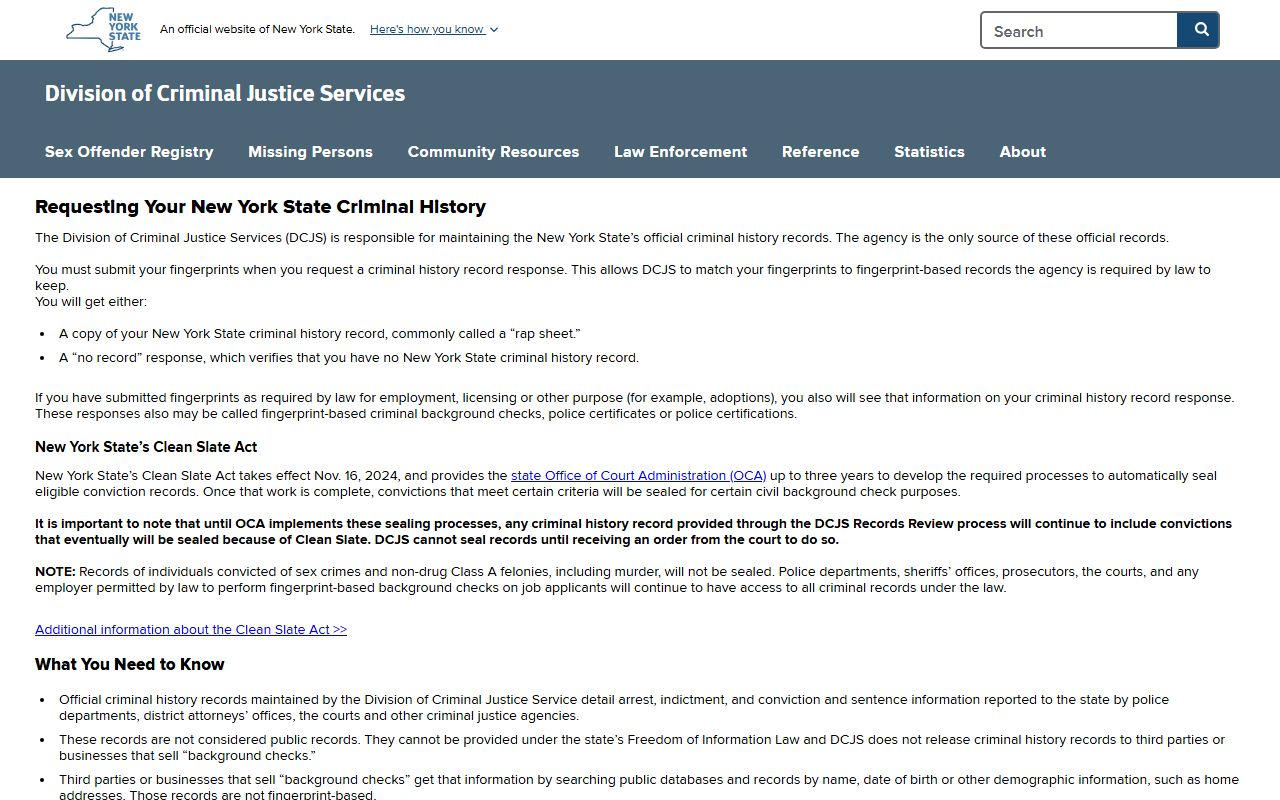
The NYSCEF system has documents for e-filed Supreme Court cases. The DOCCS Inmate Lookup is free for state prison inmates. For your own criminal history, the DCJS record review costs $14.25 and requires fingerprinting at an IdentoGo site.
Court Records Access Rules in Lewis County
Court records in Lewis County are presumed public under Judiciary Law Section 255. You can walk into the clerk's office and ask to see a case file. No appointment. No reason needed. The clerk must make records available for inspection during business hours.
Exceptions exist. Criminal cases sealed under CPL Section 160.50 are not public. Dismissed and acquitted cases get sealed automatically. The Clean Slate Act under CPL 160.59 may also seal certain older convictions. Family Court records are confidential. Matrimonial Supreme Court files are restricted.
If you get denied access to records you think should be public, CPLR Article 78 is the legal path. File a special proceeding in Supreme Court within four months of the denial. The burden shifts to the agency to justify keeping the records closed.
Lewis County Court Resources
The NYS Court Forms Repository has free forms for every court type. Download what you need for Lewis County filings. The New York State Unified Court System website has procedural guides and court locator tools.
Lewis County is close to Fort Drum in Jefferson County, so some residents may have cases in multiple counties. Check both Lewis and Jefferson County court records if your matter crosses county lines. The clerk in each county handles their own records independently.
Getting Copies of Lewis County Court Records
To get certified copies of Lewis County court records, visit the County Clerk in Lowville. Standard copies are $0.65 per page. Certification adds an extra fee per document. Bring identification and your case information. If you need a certified judgment, the clerk can prepare one while you wait in most cases.
For Supreme Court civil case documents, check NYSCEF first. If the case was e-filed, you may be able to download the documents you need without visiting the courthouse. Not all Lewis County cases use e-filing, but it is worth checking.
The NYS Court Forms Repository has free forms for all court types. If you are filing something in Lewis County, start with the forms page to make sure you have the right paperwork. Forms for Family Court, Surrogate's Court, Supreme Court, and small claims are all available for download.
Nearby Counties
Lewis County is in north-central New York. Each neighboring county maintains its own court records through its county clerk.